
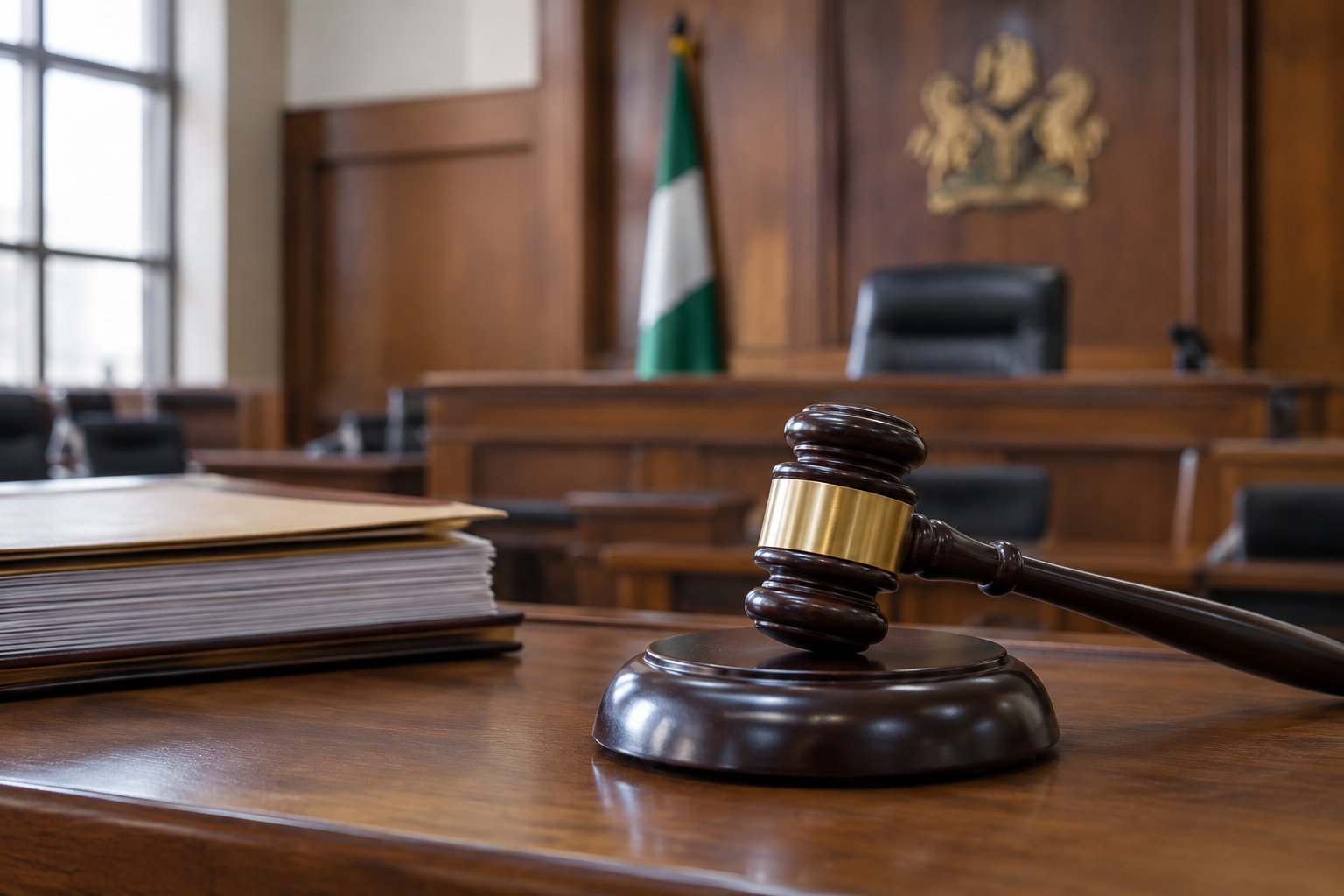
Nigeria’s Federal High Court in Abuja admitted statements and video recordings from six people accused of plotting to overthrow President Bola Tinubu, ruling on Thursday, November 5, 2026, that the evidence was not shown to have been obtained under duress. Justice Joyce Abdulmalik rejected the defendants’ objections and scheduled the next trial hearings for December 7 and 10, according to AIT and TheCable.
What the court ruled
The ruling followed a trial-within-trial, a separate proceeding to determine whether the prosecution could use the disputed statements and recordings in the main case. The court ordered that proceeding on May 11, 2026, after defence lawyers challenged the evidence, arguing that their clients had not made the statements voluntarily. The objection came after the prosecution had called four witnesses, AIT and TheCable reported.
The prosecution’s fourth witness, an army officer identified by the codename “AAA,” had tendered video recordings of the defendants’ interrogations, according to the three reports. In her ruling, Justice Abdulmalik dismissed claims that the statements and recordings resulted from torture, force, inducement or other forms of coercion. Independent and TheCable reported that she described the allegations as an afterthought; AIT said she found them unsupported by credible evidence.
The judge admitted the statements and video recordings as exhibits against the defendants. That decision concerns whether the material can be used as evidence in the trial; it is not a finding of guilt on the charges.
Who is affected and what the charges involve
The six defendants are retired Major General Mohammed Gana, retired Navy Captain Erasmus Victor, Inspector Ahmed Ibrahim, Zekeri Umoru, Bukar Goni and Abdulkadir Sani. The Federal Government arraigned them on April 22, 2026, on a 13-count charge, according to AIT and Independent. TheCable reported that the charge was filed on April 20 by the Director of Public Prosecutions of the Federation, Rotimi Oyedepo, on behalf of the government through the Office of the Attorney-General of the Federation.
The reported charges include treason, terrorism, failure to disclose security intelligence and money laundering allegedly connected to terrorism financing. These are accusations made by the government, not findings established by the admissibility ruling. The court’s decision means the disputed statements and recordings may be considered as exhibits during the substantive proceedings; the defendants’ challenge to how they were obtained has been rejected.
Why the ruling matters
The immediate change is procedural: the prosecution can rely on the admitted statements and interrogation videos as the case continues. The ruling does not resolve whether the alleged plot took place or whether any defendant committed the offences charged. Those issues remain for the trial. For readers following the case, it is important to distinguish the judge’s decision about admissibility from a verdict on the allegations.
The case is being heard in the Federal High Court, while the disputed recordings came from interrogations conducted by the military, according to the reports. The trial-within-trial addressed the defendants’ objections to that evidence; the court’s ruling settled that admissibility dispute at this stage.
Background reported on the alleged plot
TheCable reported that the alleged plot became a subject of public reports after the Federal Government announced on September 29, 2025, that it was cancelling a parade planned for Nigeria’s 65th independence anniversary on October 1. Reports subsequently linked the cancellation to an alleged coup attempt, but the Defence Headquarters rejected that connection at the time, according to TheCable.
On October 31, 2025, TheCable reported, it said 16 military officers had been arrested during the first week of that month in connection with the alleged attempt, while two others were on the run. In January 2026, the Defence Headquarters confirmed that an investigation had found some personnel involved in a plot to overthrow the government, TheCable reported. The DHQ director of defence information, Samaila Uba, said the officers would be arraigned before relevant military judicial panels.
TheCable also reported that relatives of detained officers called in March for an open trial and access to those they described as alleged masterminds. In April, relatives protested at the National Assembly entrance, seeking a speedy trial and access to family members. Those reports provide context to the wider allegations; they do not establish the guilt of the six defendants in the current Federal High Court case.
What happens next
The court set December 7 and 10, 2026, for continuation of the trial, according to AIT and Independent. The next proceedings will take place after the statements and videos have been admitted as exhibits. The reports do not describe any further decision already scheduled beyond those trial dates, so the next confirmed development for readers to watch is the continuation of the case in Abuja.
Source: thecable.ng
More sources (2)
About the author
Editorial persona of Polity Atlas.